

In this article 15 sections
- Should You Repair or Replace Your Commercial Roof?
- 7 Signs Your Commercial Roof Needs Replacement
- The 25% Rule, Roof Age and Wet Insulation | How Pros Decide
- Repair vs Coat vs Recover vs Replace | Cost and Lifespan Table
- How Moisture Scans and Core Cuts Settle the Question
- Example | Keep Patching or Replace Now?
- Tax and Insurance Angles That Change the Math
- FAQs | Repair vs Replacement
- How old is too old for a commercial roof?
- Can you replace only part of a commercial roof?
- Is it better to repair or replace before selling a building?
- Will insurance pay to replace an old roof?
- What happens if I keep patching a roof that needs replacement?
- Does a roof recover count as a replacement?
- Get an Honest Repair-or-Replace Assessment
Should You Repair or Replace Your Commercial Roof?
The decision comes down to age, moisture under the membrane, and how much you are already spending to keep the roof going. This is the same framework we use when advising on commercial roofing in San Antonio, with the cost of each option side by side.
7 Signs Your Commercial Roof Needs Replacement
- Leaks in several places, or the same leak returning after repairs
- Wet insulation across large areas, confirmed by cores or a moisture scan
- Open or failing seams over long runs, typically more than about 200 linear feet
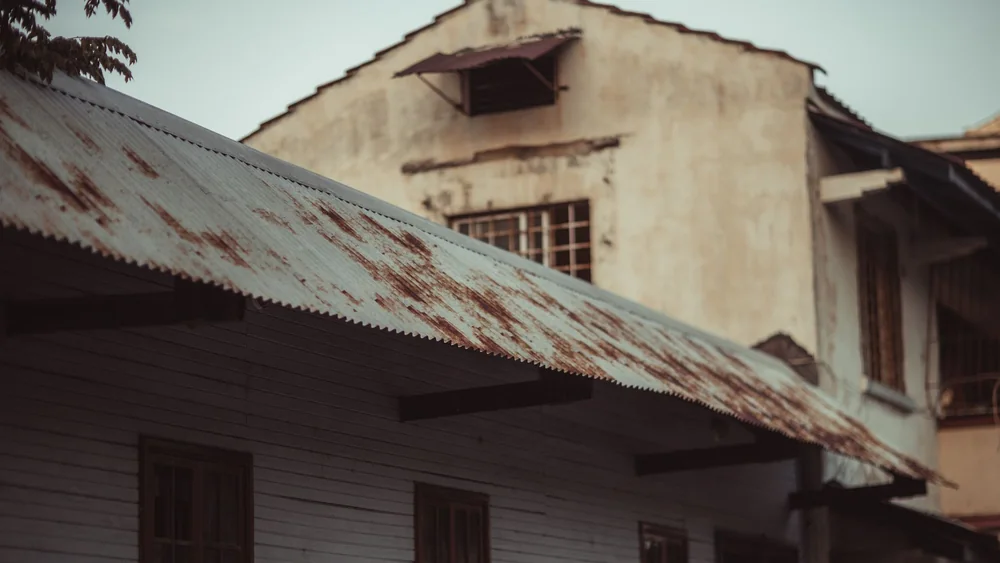
- Membrane shrinking, cracking or pulling away from walls and edges
- Rusted or soft deck, often found around drains and under rooftop units
- Chronic ponding that has damaged the membrane
- Repair bills climbing year after year on a roof past its expected life
One sign on its own often means a repair. Three or more together usually mean the roof is near the end of its service life.
The 25% Rule, Roof Age and Wet Insulation | How Pros Decide
| Factor | Repair | Coat or recover | Replace |
|---|---|---|---|
| Roof age | Under 10 years (10–15 case by case) | 10–20 years | Over 20 years |
| Wet insulation | Under about 10% | Under about 15–25% (wet areas replaced first) | Widespread |
| Area needing repair | Isolated spots | Under about 25% | Over about 25% |
| Seam damage | Short runs | Moderate | More than about 200 linear ft |
| Repair spending | Occasional | Rising | Above about 2% of replacement cost per year, three years running |
| Deck condition | Sound | Sound | Rusted or damaged in many areas |
Age, wet-insulation, seam and 2% thresholds: The Roofing Brief (2026). The 25% repair threshold for coating: Roofr (2026). These are rules of thumb, not code requirements.
Plan around your ownership too. If you will sell or demolish within about two years, a targeted repair usually beats a full replacement even on an old roof.
Repair vs Coat vs Recover vs Replace | Cost and Lifespan Table
| Option | Typical cost | Added service life | Works when |
|---|---|---|---|
| Repair | $300 – $2,500 per repair; $1,500 – $7,500+ for large areas | Until the rest of the roof wears out | Damage is local; roof is young |
| Silicone coating | $1.50 – $4.50 / sq ft; about $3 – $9 as full restoration | 10 – 20 years, recoatable | Dry insulation, sound deck, under 25% needing repair |
| Recover (new membrane over one layer) | $6 – $8 / sq ft (San Antonio) | 20+ years | Only one existing layer; insulation mostly dry |
| Full replacement (TPO) | about $7.28 – $14.66 / sq ft | 20 – 30 years | Wet insulation, multiple layers, deck damage, old roof |
Repair: The Roofing Brief and SuperSeal (2026). Coating: Roofr and Core Commercial Roofing (2026). Recover: Prestige 360, San Antonio (2026). Replacement: San Antonio TPO (Commercial Roof Guide, 2026) plus Texas tear-off and insulation (Core Commercial Roofing, 2026).
Compare options by cost per year of added life, not by the bid total. A $2 coating that adds 15 years can beat a $10 replacement, but only if the roof truly qualifies.

How Moisture Scans and Core Cuts Settle the Question
From the surface, a 10-year-old roof and a waterlogged one can look the same. Two tests remove the guesswork:
| Test | What it shows | Typical cost |
|---|---|---|
| Infrared or moisture survey | A map of wet insulation across the whole roof | about $0.05 – $0.12 / sq ft |
| Core cuts | Layers, insulation type and condition, deck condition at sample points | Usually included in a thorough inspection |
Survey pricing: ThePricer (May 2026).
On a 20,000 sq ft roof, a survey costing roughly $1,000 to $2,400 can be the difference between a $60,000 restoration and a $200,000 replacement, so it’s worth doing before you decide.
Example | Keep Patching or Replace Now?
Here’s how the decision usually plays out on an aging roof. The numbers are illustrative, using San Antonio planning ranges.
| Replace now | Patch for 3 more years, then replace | |
|---|---|---|
| Roof | 30,000 sq ft TPO, 22 years old, leaks in 4 areas | Same roof |
| Spend in years 1 – 3 | None beyond maintenance | Repairs every year, plus interior damage and disruption from new leaks |
| Wet insulation | Limited areas replaced now | Spreads with each leak; more boards to replace later at $1.00 – $3.50 / sq ft |
| Replacement | About $240,000 (at $8 / sq ft) | Same base price, plus higher insulation and deck costs, plus price increases |
| Risk | Known cost, new warranty | A hailstorm or big leak can force an emergency replacement |
Patching makes sense when the roof is under about 15 years old and dry, or you plan to sell soon. Once leaks are spreading and insulation is getting wet, waiting usually costs more, not less.
Tax and Insurance Angles That Change the Math
- Repairs and many coatings are generally deductible as expenses in the year they’re made.
- A full replacement is usually a capital improvement, but on nonresidential buildings it may qualify for Section 179 expensing. The 2026 cap is about $2.56 million, with a phase-out starting near $4.09 million. Ask your CPA.
- Storm damage can shift the decision: if hail damaged the roof, insurance may cover part of a replacement you were weighing anyway. Have it inspected before deciding. See storm and hail damage roof repair.
- Older roofs are often settled at actual cash value, so a claim on an old roof may pay less than you expect.
FAQs | Repair vs Replacement
How old is too old for a commercial roof?
Most flat commercial roofs are near the end of their life between 20 and 30 years, depending on the system and maintenance. Past 20 years, anything beyond a small repair usually points to a recover or replacement.
Can you replace only part of a commercial roof?
Yes, if the damage is limited to one section and the rest of the roof is sound. The new section must be tied in properly to the existing roof, and your warranty terms may affect how this is done.
Is it better to repair or replace before selling a building?
If you will sell within about two years, a documented repair is usually enough, and buyers will price the roof’s remaining life into the deal. A recent inspection report helps either way.
Will insurance pay to replace an old roof?
Only for damage from a covered event like hail or wind, not for age and wear. On older roofs, many policies pay actual cash value, which deducts depreciation, so the payout can fall well short of replacement cost.
What happens if I keep patching a roof that needs replacement?
Water keeps reaching the insulation and deck, so the eventual replacement gets larger, with more wet insulation and deck repair to pay for. Leaks over inventory or equipment also add costs beyond the roof.
Does a roof recover count as a replacement?
A recover installs a new membrane over the existing roof, so you get a new roof surface and a new warranty without tear-off. Code limits how many layers a roof can have, and it only works when the insulation underneath is mostly dry.
Get an Honest Repair-or-Replace Assessment
We’ll inspect the roof, check moisture under the membrane, and price repair, coating, recover and replacement side by side, with a straight recommendation based on your building and how long you plan to own it.
- Free roof assessment across San Antonio, including commercial roofing in Stone Oak, Westover Hills and Leon Valley
- Moisture check before any recommendation
- All four options priced in one report
Book your free roof inspection in San Antonio or compare commercial roof repair in San Antonio and commercial roof replacement in San Antonio.
Start the conversation
Questions get answered by the roofers who wrote the article, not a chatbot.