Shutdown-week crewsIndustrial roofing · San Antonio, TX
Repairs, retrofits and phased replacements for plants, fabrication shops and process buildings. Work is scheduled around shifts, shutdown weeks and the equipment under the roof.
※ The short answer
CRSA is a San Antonio commercial roofing contractor for manufacturing plants, fabrication shops and process buildings. We repair, retrofit and replace metal, TPO, PVC, modified bitumen and spray foam roofs across Bexar and surrounding counties, with crews that work under plant safety rules, schedule around shifts and shutdowns, and answer a live 24/7 leak line.
PMReviewed by our project team, industrial projects
Plant types we roof (building types)
A plant roof is part of the production system. These are the habits that keep our crews welcome on the floor and on the roof.
Site orientation, lockout/tagout, hot-work permits and fall protection plans are set before the first lift.
We phase work zone by zone over the floor plan, so no line runs under an open roof.
Stacks, makeup air and dust collectors are marked on day one, and work near them is timed with your maintenance team.
Big tie-ins and crane lifts happen when the line is down. Repairs keep going around the clock if needed.
Daily logs, JSAs, hot-work and fire watch records, and photo reports in one closeout binder.
Drop zones, debris netting and covers over machinery and finished goods before tear-off starts.
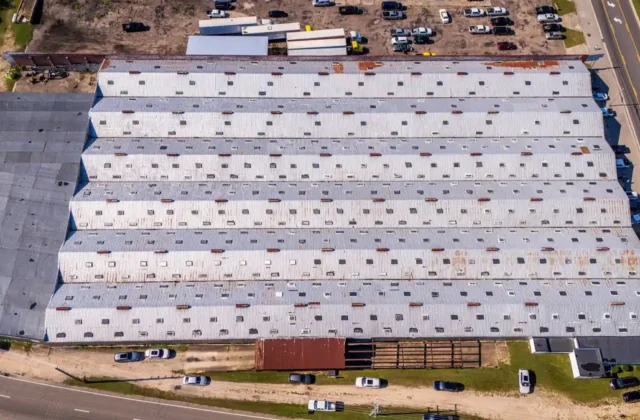
From one leaking curb over a CNC cell to a full metal retrofit on a 300,000 sq ft plant.
Live 24/7 line, crew on site within 4 hours, temporary dry-in and equipment protection coordinated with your maintenance lead.
New standing seam or R-panel on sub-framing over the old roof. No tear-off, no open roof over the line, insulation added in the gap.
TPO or PVC replaced in zones that match the floor plan below, each closed watertight by end of shift.
PVC or coated sections where process exhaust, oils or solvents land and break down other roofs.
Silicone or spray foam over sound roofs to add 10 to 20 years and cut heat load in the plant.
Two inspections a year plus after storms, with ranked repair lists your capital plan can use.
Pick a system to see how it is built and how it behaves over a working production floor.
Our usual pick for old metal plant roofs
Metal retrofit roofing details
Why it fits: Goes on over the existing roof, so the plant never sees an open deck, and the new cavity takes the insulation the old roof never had.
Watch out: Needs a structural check for the added weight and a careful plan around existing skylights and vents.
Best around process exhaust and oils
Why it fits: Heat-welded seams and strong resistance to oils, solvents and exhaust residue that soften other membranes.
Watch out: Costs more than TPO. Use it where exhaust lands, not always across the whole plant.
Best value on big low-slope plant roofs
Why it fits: White, reflective and welded with hot air. Keeps heat out of the plant and costs less per foot than PVC.
Watch out: Keep it away from oily exhaust, and add walkway pads on maintenance routes.
Seals and insulates irregular roofs
Why it fits: Sprayed in one seamless layer over most existing roofs, sealing hundreds of penetrations and adding R-value.
Watch out: Needs dry substrate and low wind; overspray must be controlled around parked equipment and vehicles.
Tough surface for heavy service traffic
Modified bitumen roofing details
Why it fits: Multiple plies take dropped tools and constant foot traffic from maintenance crews.
Watch out: Hot or torch-applied versions need fire watch; we specify cold or self-adhered near process areas.
Every plant project follows the same six steps, written with your plant manager and EHS team.
We map the roof against the plant layout: lines, cleanrooms, finished goods, electrical rooms and every stack and intake.
Your EHS team signs off on fall protection, hot work, lockout and crane plans before any work starts.
Zones follow the floor plan so each one can be opened and closed watertight in one shift.
Netting, covers and drop zones over machinery and product before tear-off or fastener work.
Crane lifts at shift change, noisy work in daylight, tie-ins during shutdown windows.
Warranty, roof map with every penetration, photo report and a maintenance plan you can budget against.
A typical day on a plant roof
Planned aroundyour shifts
Six groups feel a roof project. Each one gets a named contact on our side.
Team 01
Site orientation, JSAs, hot-work permits and daily safety sign-off.
Named contact on our sideTeam 02
Lockouts, exhaust shutdowns and roof access routes.
Named contact on our sideTeam 03
Zone schedule matched to lines and shutdown weeks.
Named contact on our sideTeam 04
Debris control over product and clean areas.
Named contact on our sideTeam 05
Gate access, deliveries and crane staging.
Named contact on our sideTeam 06
Phased budgets and multi-year roof plans.
Named contact on our sideSample 2026 ranges for the San Antonio area. Plant work carries extra lines for safety, equipment protection and shutdown scheduling, and we show them separately.
Plant line items we show separately
Plan tie-ins and the noisiest work for your planned shutdowns, and book the crew months ahead.
A ranked list of repair now, restore soon, replace later, with a number on each line.
On old metal plants, a retrofit often costs less than tear-off and never opens the roof.
Fix the fasteners and the exhaust zones first. On most old plant roofs, that stops more leaks than any new membrane.
Drive times are from downtown San Antonio. Plants along I-35, I-10 and Loop 410 usually see a crew within a few hours for active leaks.
Pick an areaDrive times from downtown San Antonio.
Plant and maintenance managers ask us these before most projects. Something else? Call a project manager.
Yes. We phase the roof into zones that match the floor plan, protect equipment below and close every zone watertight by the end of the shift. Tie-ins and crane-heavy work go into shutdown windows.
Often. A retrofit installs new panels on sub-framing over the old roof, so the plant is never open to weather, and you gain room for insulation. A structural check confirms the building can carry it.
PVC, or a coating rated for the chemicals involved. Oils and solvents break down asphalt, EPDM and TPO over time, so we use PVC zones around stacks and fans.
Yes. Our crews complete your site orientation and work under your lockout, hot-work and fall protection rules, with daily sign-off from your EHS lead.
In 2026 most single-ply replacements run about $9.50 to $16 per square foot, metal retrofits about $9 to $16, and restoration coatings $3 to $7.50, plus shutdown, protection and crane costs we list separately.
If the panels are sound, yes. Fasteners are replaced, seams and laps sealed, rust treated and the roof coated. Badly rusted panels need a retrofit instead.
Yes. We inspect after storms, document damage with photos and cores for your insurer, and make temporary repairs right away.
Yes. We repair, replace or cover old skylights and keep smoke vents working, with fall protection at every opening.
Tell us about the plant and what runs under the roof. A project manager calls back within 2 business hours, or right away for an active leak.
Something went wrong. Please call (210) 384-6843 or try again.
A project manager will call you within 2 business hours. Need us sooner? (210) 384-6843
Written by the crews who do this work. All articles