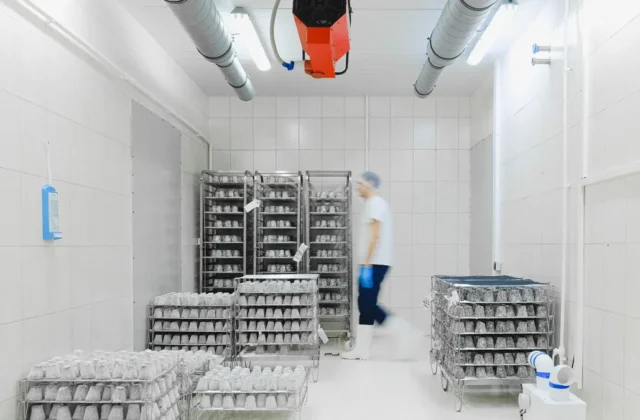
Cold chain protectedCold storage roofing · San Antonio, TX
Vapor-tight roofs, insulated panels and food-safe repairs for freezers, coolers, food processing plants and refrigerated distribution.
※ The short answer
CRSA is a San Antonio commercial roofing contractor for freezers, coolers, food processing plants and refrigerated distribution centers. We repair and replace vapor-tight TPO, PVC and insulated metal panel roofs across Bexar and surrounding counties, protect food areas below, and answer a live 24/7 leak line.
PMReviewed by our project team, cold storage projects
Cold buildings we roof (building types)
In a cold building, the roof is part of the refrigeration system. These habits protect both.
In San Antonio heat, moisture pushes into freezers. We build and repair roofs with the vapor barrier on the warm side.
No debris over open product, and work planned with your food safety and sanitation teams.
Ice on ceilings and frost on insulation are traced to the roof gaps causing them.
A live person 24/7 and a crew on site within 4 hours to protect product.
Refrigeration condensers, curbs and pipe penetrations sealed and flashed.
Logs and photo reports for food safety audits and insurers.
From one frosted panel joint to a full freezer roof replacement.
Live 24/7 line, crew on site within 4 hours and immediate protection over food and product.
Roofs rebuilt with a continuous vapor barrier and thick insulation that stops ice and frost.
IMP roof repair and replacement, with joints sealed for low temperatures.
Grease- and chemical-resistant membranes where process exhaust lands.
Refrigeration equipment on the roof flashed and supported properly.
Seasonal inspections focused on vapor leaks, curbs and drains.
Pick a system to see how it keeps heat and moisture out of a cold building.
Our usual pick over food processing
Why it fits: Welded seams and resistance to fats and cleaning chemicals, over a continuous vapor barrier.
Watch out: Must be separated from asphalt; higher cost than TPO.
For freezer and cooler warehouses
Why it fits: White surface cuts heat load on the refrigeration system; welded seams stay tight.
Watch out: Vapor barrier and insulation detailing matter more than the membrane.
For new freezer and cooler buildings
Commercial metal roofing details
Why it fits: Factory-made panels with thick foam cores give high R-values and tight joints.
Watch out: Joints and fasteners need careful sealing; repairs need matching panels.
Seals and insulates an existing roof
Why it fits: Seamless foam adds R-value and seals every penetration over an existing roof.
Watch out: Needs dry substrate; overspray control near trucks and docks.
Cuts heat load on a sound roof
Why it fits: A white silicone coating lowers roof temperature and refrigeration load.
Watch out: Does not fix vapor problems; only for dry, sound roofs.
Every cold storage project follows the same six steps, planned with your operations and food safety teams.
Freezers, coolers, docks and processing lines marked under every roof area.
Ice, frost and wet insulation traced back to roof and wall gaps.
Debris control, sanitation and access rules signed off first.
Covers or moved product under any open zone.
Vapor barrier, insulation and membrane installed and sealed zone by zone.
Warranty, roof map, photos and a maintenance plan for audits.
A typical day on a cold storage roof
Planned aroundyour shipping schedule
Six teams feel a cold storage roof project. Each one gets a named contact.
Team 01
Zones matched to freezers, coolers and docks.
Named contact on our sideTeam 02
Debris control and audit records.
Named contact on our sideTeam 03
Condensers, lines and curbs.
Named contact on our sideTeam 04
Cleanup and access during wash-downs.
Named contact on our sideTeam 05
Reefer traffic and crane spots.
Named contact on our sideTeam 06
Budget and capital plan.
Named contact on our sideSample 2026 ranges for the San Antonio area. Cold buildings need thicker insulation and vapor control, shown as separate lines.
Cold storage line items we show separately
Ice and frost mean moisture is getting in; insulation alone will not fix it.
A tighter, whiter roof lowers refrigeration loads every summer.
Keep roof logs with your food safety records.
Ice on a freezer ceiling is a roof problem wearing a refrigeration costume.
Drive times are from downtown San Antonio. Food plants and cold storage along I-35, I-10 and the South Side are on our routes.
Pick an areaDrive times from downtown San Antonio.
Cold chain and plant managers ask us these first. Something else? Call a project manager.
Warm, humid air is getting through gaps in the roof or vapor barrier and freezing inside. Sealing the vapor path fixes it.
A vapor-tight assembly with thick insulation, topped with PVC over food processing or TPO over storage. Insulated metal panels suit new buildings.
Yes. Product is protected or moved under open zones, and every zone is closed daily.
In 2026, vapor-tight TPO or PVC roofs run about $12 to $20 per square foot, and insulated metal panels about $14 to $22.
Yes. Debris control, sanitation and access rules are agreed with your food safety team first.
Yes. It adds insulation and seals penetrations over an existing dry roof.
Yes, including joint sealing and panel replacement.
Yes. We flash curbs and supports for refrigeration equipment.
Tell us about the building and what is stored under the roof. A project manager calls back within 2 business hours, or right away for an active leak.
Something went wrong. Please call (210) 384-6843 or try again.
A project manager will call you within 2 business hours. Need us sooner? (210) 384-6843
Written by the crews who do this work. All articles