

In this article 16 sections
- TPO vs PVC | Which Should You Choose?
- Comparison Table | Cost, Lifespan, Fire and Chemical Resistance
- Cost Difference per Square Foot
- What Each Costs on a Real Building
- Lifespan and Warranty Comparison
- Grease, Chemicals and Rooftop Exhaust | Where PVC Wins
- Heat Reflectivity and Seam Strength
- Best Fit by Building | Restaurants, Food Processing, Offices, Warehouses
- Decide in Three Questions
- FAQs | TPO vs PVC
- Is PVC worth the extra cost over TPO?
- Are PVC and TPO compatible?
- How can you tell if a roof is TPO or PVC?
- Do PVC roofs get brittle?
- Which is better for a restaurant roof?
- Ask Which Membrane Fits Your Facility
TPO vs PVC | Which Should You Choose?
The two look almost identical on a roof and install the same way, so the decision really comes down to what will land on the membrane. Here’s the comparison we walk owners through when planning commercial roofing in San Antonio.
Comparison Table | Cost, Lifespan, Fire and Chemical Resistance
| TPO | PVC | |
|---|---|---|
| Installed cost (San Antonio, 60 mil) | $5.28 – $8.16 / sq ft | $6.24 – $9.60 / sq ft |
| Expected lifespan | 20 – 30 years | 25 – 35 years |
| Seams | Heat-welded | Heat-welded |
| Grease and oil resistance | Moderate; can degrade with grease | Strong |
| Chemical resistance | Moderate | Strong (KEE-enhanced grades best) |
| Fire performance | Meets FM/UL standards by assembly | Inherently fire-retardant; meets FM/UL by assembly |
| Reflectivity | High (white) | High (white) |
| Best for | Warehouses, retail, offices | Restaurants, food plants, labs, industrial exhaust |
Cost and lifespan: Commercial Roof Guide, San Antonio (Mar 2026).

Cost Difference per Square Foot
PVC typically costs about $1 to $1.50 more per sq ft than TPO in San Antonio. On a 15,000 sq ft restaurant or food-plant roof, that’s roughly $15,000 to $22,000 more for the membrane. Premium PVC-KEE grades cost more again. Nationally, PVC-KEE runs about $1.50 more per sq ft than standard PVC.
What Each Costs on a Real Building
| Roof size | TPO ($5.28 – $8.16 / sq ft) | PVC ($6.24 – $9.60 / sq ft) |
|---|---|---|
| 20,000 sq ft | $105,600 – $163,200 | $124,800 – $192,000 |
| 50,000 sq ft | $264,000 – $408,000 | $312,000 – $480,000 |
Roof area × San Antonio installed ranges (Commercial Roof Guide, Mar 2026). Tear-off and insulation upgrades are extra.
Lifespan and Warranty Comparison
PVC’s range runs a few years longer, 25 to 35 years versus 20 to 30 for TPO, largely because it holds up to exposures that shorten TPO’s life. On a clean roof with no grease or chemicals, a quality 60 or 80-mil TPO often matches PVC in practice. Manufacturer warranties for both commonly run 15 to 30 years depending on thickness and system.
Grease, Chemicals and Rooftop Exhaust | Where PVC Wins
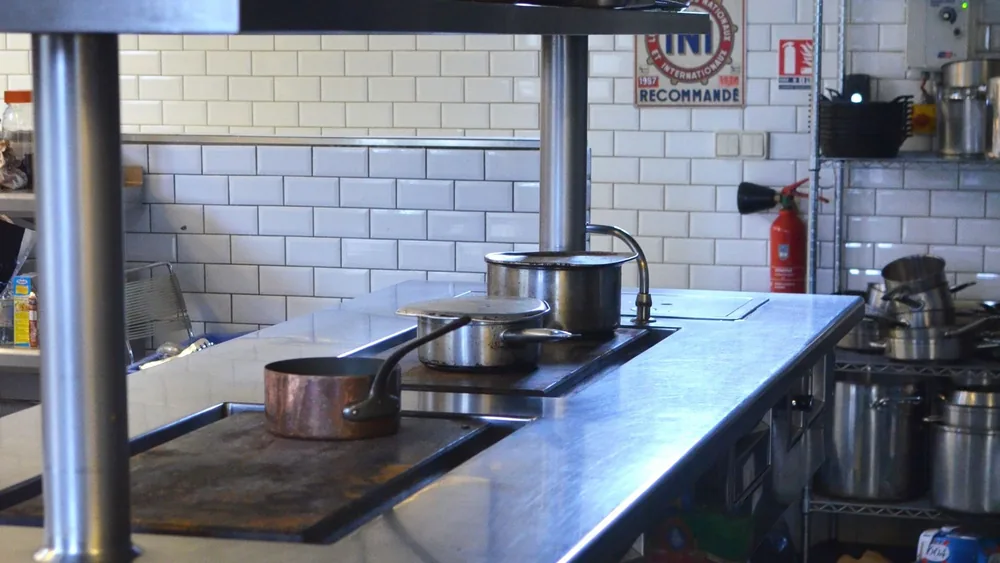
Animal fats, cooking oils and many industrial chemicals soften and swell TPO over time, leading to cracking and failed seams around exhaust fans. PVC resists them. If your roof has any of these, PVC is worth the extra cost:
- Restaurant or commercial kitchen exhaust
- Food processing, meat packing or bakery vents
- Labs, chemical storage or manufacturing exhaust
- Areas around grease traps and rooftop grease containment
Some owners put PVC only around exhaust areas and TPO elsewhere. Because TPO and PVC can’t be heat-welded to each other, that requires a careful transition detail.
Heat Reflectivity and Seam Strength
Both come in white and reflect most of the sun’s heat, which matters in San Antonio summers. Both have heat-welded seams that fuse into one sheet. The practical difference here is small: choose on chemical exposure and budget, not on reflectivity.
Best Fit by Building | Restaurants, Food Processing, Offices, Warehouses
| Building | Recommended | Why |
|---|---|---|
| Restaurant / commercial kitchen | PVC | Grease exhaust |
| Cold storage & food processing roofing | PVC | Fats, oils and cleaning chemicals |
| Manufacturing plant roofing | PVC near exhaust; TPO elsewhere | Depends on process emissions |
| Office building roofing | TPO | No chemical exposure; lower cost |
| Warehouse & distribution center roofing | TPO | Large area; cost-effective |
See PVC roofing and TPO roofing in San Antonio.
Decide in Three Questions
- Does anything on the roof vent grease, oils or chemicals? Restaurant hoods, food processing or industrial exhaust: choose PVC at least in those areas.
- Is fire performance a specific requirement from your insurer or code official? PVC is inherently flame-resistant; both can be part of Class A assemblies.
- If neither applies, choose TPO and put the savings into thicker membrane (60 or 80 mil) and better insulation.
FAQs | TPO vs PVC
Is PVC worth the extra cost over TPO?
Only if the roof sees grease, oils or chemicals. On a clean office or warehouse roof, TPO gives similar performance for less money. Around restaurant or process exhaust, PVC avoids premature failure that would cost more than the price difference.
Are PVC and TPO compatible?
No. They can’t be heat-welded to each other, so patches must use the same material as the roof. Where both are used on one building, a separate transition detail is needed.
How can you tell if a roof is TPO or PVC?
They look nearly identical, so check the warranty, permit file or original proposal. A roofer can also confirm from manufacturer markings along the sheet edges.
Do PVC roofs get brittle?
Older PVC formulations could lose plasticizers and become brittle over many years. Modern commercial PVC, especially KEE-enhanced grades, is formulated to stay flexible, but age and UV still matter, so inspections are important.
Which is better for a restaurant roof?
PVC. Restaurant exhaust deposits grease on the roof, which softens and damages TPO over time. PVC resists it, and grease containment around exhaust fans adds further protection.
Ask Which Membrane Fits Your Facility
Tell us what’s on and around your roof. We’ll inspect it, check exhaust and equipment areas, and recommend TPO, PVC or a combination, with pricing for each.
- Free roof assessment across San Antonio, including Westover Hills, roof repair in Alamo Heights and Leon Valley
- Exhaust and grease areas checked specifically
- Side-by-side pricing for both membranes
Book your free roof inspection in San Antonio or see commercial roof replacement in San Antonio.
Start the conversation
Questions get answered by the roofers who wrote the article, not a chatbot.