


In this article 19 sections
- How Do You File a Hail Damage Claim for a Commercial Roof?
- Step 1 | Document the Damage and Prevent Further Damage
- Step 2 | Get a Professional Roof Inspection and Damage Report
- Step 3 | Review Your Policy (Deductibles, ACV vs RCV, Cosmetic Exclusions)
- Step 4 | Report the Claim and Meet Texas Deadlines
- Step 5 | Prepare for the Adjuster Visit
- Step 6 | Review the Settlement, Scope of Work and Repairs
- Common Mistakes That Get Commercial Claims Denied
- How Your Roofing Contractor Should Support the Claim
- FAQs | Commercial Hail Claims in Texas
- Does commercial property insurance cover hail damage?
- Is it worth filing a claim for hail damage?
- How long do I have to claim hail damage on a roof in Texas?
- How do you prove hail damage is from a recent storm?
- Why do adjusters deny commercial roof claims?
- Can you appeal a denied commercial roof claim in Texas?
- Can I keep the insurance money and not replace the roof?
- What should I avoid saying to the adjuster?
- Get a Free Hail Damage Inspection
How Do You File a Hail Damage Claim for a Commercial Roof?
Commercial claims are bigger and more technical than homeowner claims. Flat roofs hide damage under the membrane, and a large building often carries a percentage-based deductible. The steps below follow the order things actually happen after a storm, drawn from our day-to-day work in commercial roofing in San Antonio, so you can work through them one at a time.
| Step | Who does it | When |
|---|---|---|
| 1. Document and prevent further damage | Owner / facility team | Same day as the storm, or as soon as it is safe |
| 2. Professional inspection and report | Commercial roofer | Within days, not weeks |
| 3. Review your policy | Owner, with agent or broker | Before or while reporting |
| 4. Report the claim | Owner | As soon as possible; check the policy deadline |
| 5. Adjuster inspection | Insurer’s adjuster, with owner and roofer present | Usually within weeks of reporting |
| 6. Settlement and repairs | Owner, insurer, roofer | After the insurer’s decision |
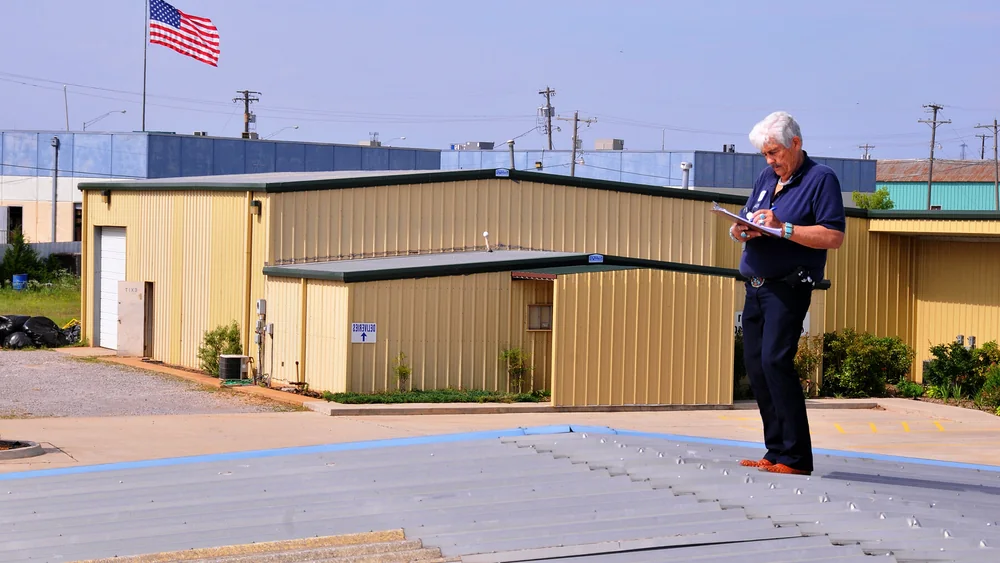
Step 1 | Document the Damage and Prevent Further Damage
Your policy expects you to take reasonable steps to keep damage from getting worse. It also helps to start your evidence file while the storm is fresh.
- Write down the date and time of the storm, and save local weather alerts or news reports that mention hail in your area.
- Photograph from the ground and inside: dented gutters, rooftop units, skylights, vehicles in the lot, ceiling stains and wet inventory. Don’t go on a wet or damaged roof yourself.
- Stop active leaks. Move inventory and equipment, put down catch containers, and call for emergency roof repair in San Antonio, such as tarping or a temporary patch, if water is getting in.
- Keep every receipt for emergency work, cleanup and equipment rental. These costs are often part of the claim.
- Don’t throw out damaged materials until the adjuster has seen them or you have clear photos.
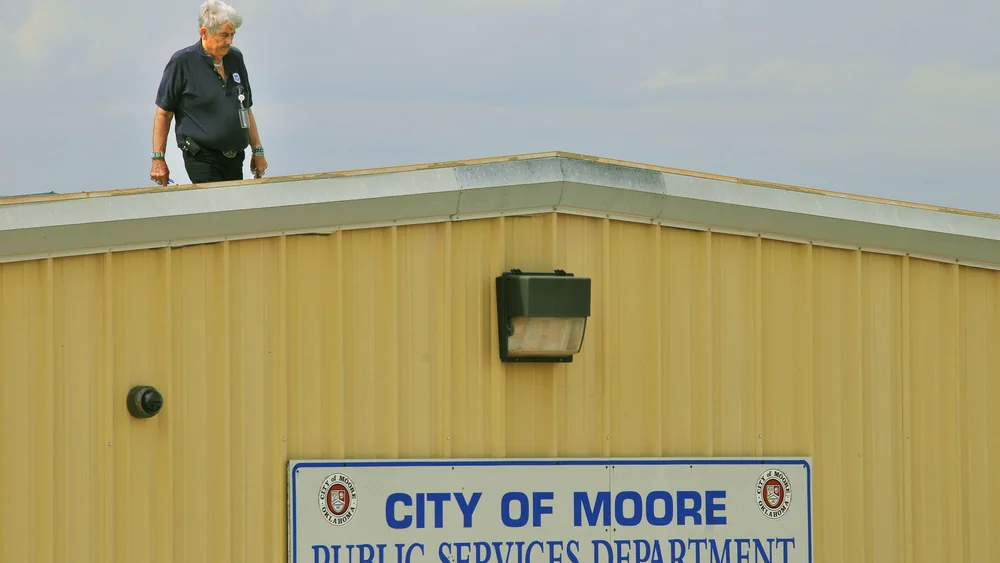
Step 2 | Get a Professional Roof Inspection and Damage Report
Hail damage on a flat commercial roof is often invisible from the ground and easy to miss from the surface. Hail can fracture a membrane, crush the insulation or cover board underneath, or crack seams that only start leaking months later. A proper commercial inspection should include:
- Date-stamped photos of every impact area, with a scale reference and location marked on a roof plan
- Test squares that count hits in sample areas, plus checks of soft metals such as vents, flashing and HVAC fins, which show hail size and direction
- Core cuts or a moisture survey to check whether insulation under the membrane is wet or crushed
- A written report that separates storm damage from normal aging, with a repair or replacement scope and estimate
Membrane type changes what the damage looks like. See how we assess TPO roofing, EPDM rubber roofing and commercial metal roofing for hail damage.

Step 3 | Review Your Policy (Deductibles, ACV vs RCV, Cosmetic Exclusions)
Commercial property policies vary much more than homeowner policies. Before you file, ask your agent or broker about these terms:
| Policy term | What it means | Why it matters for your roof |
|---|---|---|
| Wind/hail deductible | Often a percentage of the building’s insured value rather than a flat amount | On a building insured for $5 million, a 2% deductible is $100,000. Know the number before you file. |
| Replacement cost (RCV) | Pays what it costs to repair or replace today, usually paid in two parts | The second payment (recoverable depreciation) is typically released after the work is completed. |
| Actual cash value (ACV) | Replacement cost minus depreciation for age and wear | Older roofs can receive much less. Some policies switch to ACV once a roof passes a certain age. |
| Cosmetic damage exclusion | Excludes damage that affects appearance but not function | Common on metal roofs: dents may not be covered unless they cause leaks or loss of function. |
| Ordinance or law coverage | Pays for upgrades required by current building code | A replacement may require more insulation or other code upgrades than the old roof had. |
| Duties after loss | Your obligations: prompt notice, protecting the property, keeping records | Missing these can reduce or jeopardize the claim. |
Step 4 | Report the Claim and Meet Texas Deadlines
Report the claim in writing as soon as you know about the damage, and keep a copy. Texas gives both sides deadlines:
| Deadline | What Texas requires | Source |
|---|---|---|
| Your deadline to report | Set by your policy. Some policies allow one year unless you show good cause for a delay, so report early. | TDI |
| Insurer acknowledges the claim | Within 15 days | TDI |
| Insurer accepts or denies | Within 15 business days after it has all the information it needs; up to 45 days if it gives a reason for needing more time | TDI |
| Insurer pays | Within 5 business days after agreeing to pay (20 business days for surplus lines insurers) | TDI |
| Before filing a lawsuit | Written notice to the insurer at least 61 days before suing over weather-related damage | Tex. Ins. Code ch. 542A |
| Contractual time to sue | A policy cannot shorten the time to sue to less than two years | Tex. Civ. Prac. & Rem. Code §16.070 |
Why reporting quickly matters even when the deadline is far away: hail damage gets harder to prove as the roof ages, and a later storm can muddy which event caused what. Give the insurer the inspection report and photos from Step 2 with your claim.
Step 5 | Prepare for the Adjuster Visit
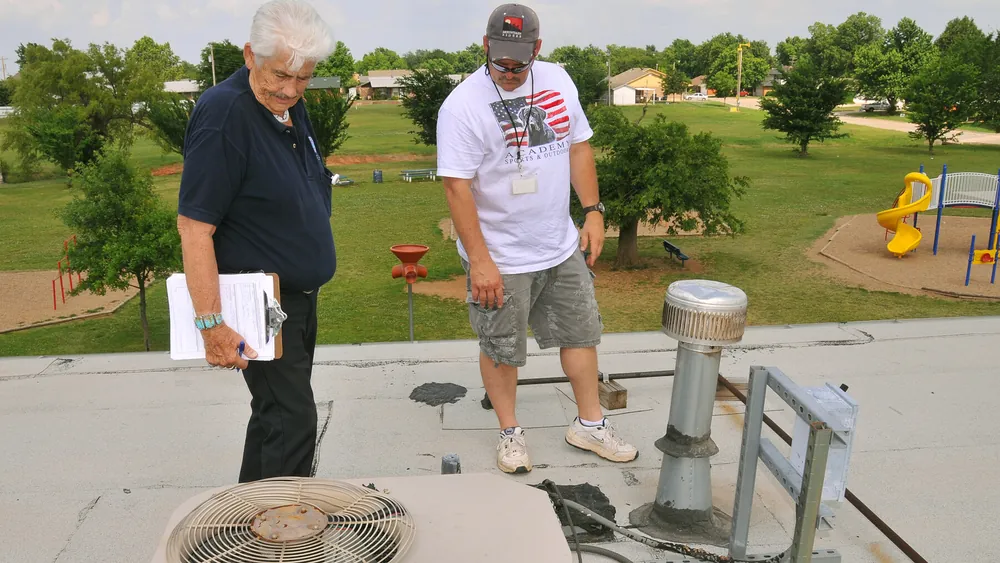
The adjuster works for the insurance company and decides what the insurer considers storm damage. A well-prepared visit is the best way to make sure nothing is missed.
- Ask your roofer to attend. They can walk the adjuster to every documented impact area and explain the test results.
- Have your file ready: storm date, photos, inspection report, core or moisture results, interior damage photos and emergency repair receipts.
- Point out hidden damage. Ask the adjuster to look at core samples or moisture readings, not only the membrane surface.
- Note what the adjuster inspected. Write down which areas they walked and which they didn’t.
- Ask for the adjuster’s estimate in writing, including how they reached their figures.
Step 6 | Review the Settlement, Scope of Work and Repairs
When the estimate arrives, compare it line by line with your roofer’s scope before you accept it. Look for:
- Repair vs replacement. Does the insurer’s scope fix the whole damaged system, or patch spots on a roof where the insulation is also damaged?
- Missing items: tear-off, wet insulation, cover board, flashing, edge metal, rooftop unit removal and reset, permits and code upgrades.
- Depreciation held back on an RCV policy, and what you must submit to recover it after the work is done.
- Your deductible. Under Texas law, you must pay it. A contractor cannot legally waive, rebate or absorb it, so treat any offer to do so as a red flag.
If the numbers don’t match, ask the insurer to re-inspect or consider a supplement with added documentation. If you still disagree, most commercial policies include an appraisal clause, and a licensed public adjuster or attorney can advise you on next steps.
Common Mistakes That Get Commercial Claims Denied
| Mistake | What happens | How to avoid it |
|---|---|---|
| Waiting months to report | Insurer argues the damage came from wear or an earlier storm | Inspect and report within days of the storm |
| No record of the roof’s condition before the storm | Hard to prove the damage is new | Keep dated maintenance and inspection reports |
| Letting leaks run | Interior damage may be reduced for failing to mitigate | Tarp or make temporary repairs right away and keep receipts |
| Surface-only inspection | Crushed insulation and fractured membrane are missed | Insist on cores or a moisture survey |
| Unauthorized repairs before the adjuster sees the roof | Evidence is gone | Make only temporary repairs; photograph everything first |
| Hiring a storm chaser | Poor documentation, unfinished work, possible deductible-waiver fraud | Use a local, established commercial roofer |
How Your Roofing Contractor Should Support the Claim
A good commercial roofer makes your claim stronger with technical evidence. Texas law also sets clear limits on what a contractor may do.
| A roofer should | A roofer may not (Texas law) |
|---|---|
| Inspect the roof and write a detailed damage report | Act as your public adjuster or negotiate your claim settlement |
| Provide photos, test results, core samples and a repair scope | Claim to speak for you on coverage questions |
| Meet the adjuster on the roof and show the documented damage | Offer to waive, rebate or pay your deductible |
| Provide an itemized estimate the insurer can compare | Advertise that they will “get your claim paid” |
If you want someone to negotiate the claim for you, that is the role of a licensed public adjuster or an attorney. We can work alongside either one, and our hail damage roof repair process is built to support that documentation.
FAQs | Commercial Hail Claims in Texas
Does commercial property insurance cover hail damage?
Most commercial property policies in Texas cover hail, but often with a separate wind/hail deductible, a cosmetic damage exclusion or actual-cash-value settlement for older roofs. Some policies exclude wind and hail entirely. Your declarations page and any wind/hail endorsement will tell you exactly what applies.
Is it worth filing a claim for hail damage?
Compare the estimated repair cost with your deductible before you file. If the damage is well below the deductible, the claim may pay nothing. A professional inspection first gives you that number. If the damage includes wet insulation or fractured membrane, the scope is often much larger than it looks from the surface.
How long do I have to claim hail damage on a roof in Texas?
Your policy sets the reporting deadline, and some policies allow one year unless you show good cause for a delay. Separately, a policy cannot shorten your time to sue below two years under Texas law. Report as soon as you know about the damage. Late claims are easier for the insurer to tie to wear or a different storm.
How do you prove hail damage is from a recent storm?
Link the damage to a specific date: save local storm reports and hail data for your address, get the roof inspected promptly, and keep earlier inspection reports showing the roof’s condition before the storm. Fresh hail fractures look sharp and clean, while older damage shows weathering. That difference fades as months pass.
Why do adjusters deny commercial roof claims?
The most common reasons are that the damage is judged to be wear and tear or pre-existing, the policy’s cosmetic damage exclusion applies, the claim was reported late, or there are no records showing the roof was maintained. Thorough documentation and a prompt inspection address most of these.
Can you appeal a denied commercial roof claim in Texas?
Yes. Ask the insurer for the denial reason in writing, then request a re-inspection with added evidence. If you still disagree, most commercial policies include an appraisal process. You can also file a complaint with the Texas Department of Insurance or talk to an attorney. A lawsuit over weather-related damage requires written notice at least 61 days before filing.
Can I keep the insurance money and not replace the roof?
Often not entirely. On replacement-cost policies, the insurer usually holds back depreciation until the work is completed. If the building has a mortgage, the lender is often named on the check. Unrepaired damage can also limit coverage for the next storm. Read your policy and loan terms before deciding.
What should I avoid saying to the adjuster?
Don’t guess. If you don’t know the roof’s age, when a leak started or whether there was earlier damage, say so and offer to provide the records. Stick to facts and documentation, and don’t agree to a scope or sign a release on the spot. Ask for everything in writing.
Get a Free Hail Damage Inspection
If a storm has passed over your building, a free inspection costs you nothing and gives you the evidence you need to decide whether to file. We’ll check the membrane, flashings, rooftop equipment and the insulation underneath, then give you a written, photo-documented damage report.
- Free post-storm inspection for commercial buildings across San Antonio, including Westover Hills, storm damage roof repair in Alamo Ranch and Live Oak
- Detailed report with photos, test results and a repair scope
- On-roof support at the adjuster meeting to show the documented damage
- Emergency tarping if water is already getting in
Schedule your free roof inspection in San Antonio or learn more about storm and hail damage roof repair in San Antonio.


Start the conversation
Questions get answered by the roofers who wrote the article, not a chatbot.