

In this article 18 sections
- What Is Included in a Commercial Roof Inspection?
- Full Inspection Checklist
- How Often Should a Commercial Roof Be Inspected?
- Types of Inspections | Annual, Post-Storm, Pre-Purchase, Warranty
- Inspection Methods | Visual, Infrared, Moisture Meters, Cores and Drones
- What a Good Inspection Report Looks Like
- Who Should Inspect Your Roof?
- Warning Signs to Watch for Between Inspections
- Buying a Building? What the Roof Report Must Answer
- How Much a Commercial Roof Inspection Costs
- FAQs | Commercial Roof Inspections
- Can a drone inspection replace a roof walk?
- Will a roof inspection lower my insurance premium?
- Is a free roof inspection really free?
- How long does a commercial roof inspection take?
- What fails a commercial roof inspection?
- Can my insurance company inspect my roof?
- Book Your Free Roof Assessment
What Is Included in a Commercial Roof Inspection?
A good inspection tells you what’s wrong, how urgent it is, and what it will cost. That’s exactly what owners need before budgeting, filing a claim or buying a building. Here’s what a thorough inspection covers when we do one as part of commercial roofing in San Antonio.

Full Inspection Checklist
| Area | What’s checked |
|---|---|
| Membrane surface | Punctures, cracks, blisters, shrinkage, UV wear, exposed scrim |
| Seams | Probed for gaps, lifted edges and failed welds or adhesive |
| Flashings | Wall, curb, parapet and edge flashing; terminations and counterflashing |
| Penetrations | Pipe boots, pitch pans, vents, skylights, HVAC curbs |
| Drainage | Drains, scuppers, gutters, downspouts; signs of ponding |
| Edges and coping | Edge metal, coping caps, fasteners, sealant |
| Rooftop equipment | Condensate lines, service damage, loose panels, debris |
| Underside / interior | Ceiling stains, deck rust, top-floor walls |
| Moisture (if scanned) | Wet insulation mapped by infrared, capacitance or cores |
| Safety | Skylight protection, roof access, fall hazards |
How Often Should a Commercial Roof Be Inspected?
At least twice a year, in spring and fall, plus after any hail, high wind or heavy storm. NRCA and GSA guidance both call for twice-yearly inspections on low-slope roofs.
| Trigger | Why |
|---|---|
| Spring (before April–May hail peak in San Antonio) | Clear drains, fix weak spots before storm season |
| Fall (after summer heat) | Catch UV and heat damage, seam and sealant wear |
| After hail, high wind or a long rain | Document damage while it’s fresh for insurance |
| After rooftop work (HVAC, solar, cabling) | Other trades are a top cause of punctures |
| Before buying, leasing or refinancing | Know remaining life and near-term costs |
| Before a warranty expires | Get covered defects fixed at no cost |
Types of Inspections | Annual, Post-Storm, Pre-Purchase, Warranty
| Type | When | Purpose |
|---|---|---|
| Routine (spring and fall) | Twice a year | Catch small issues early; keep warranty records |
| Post-storm | Within days of hail or high wind | Document damage for insurance |
| Pre-purchase / due diligence | Before buying or leasing a building | Estimate remaining life and near-term costs |
| Warranty / closeout | End of a project or warranty period | Confirm workmanship before coverage ends |
Inspection Methods | Visual, Infrared, Moisture Meters, Cores and Drones
Every inspection starts with a visual roof walk. The other methods find what the eye can’t, mainly wet insulation.
| Method | What it finds | When it’s worth it |
|---|---|---|
| Visual roof walk | Surface damage, seams, flashing, drains, ponding | Every inspection |
| Infrared (thermal) scan | Wet insulation, which holds heat after sunset | Repeat leaks, repair-or-replace decisions, purchases |
| Capacitance or nuclear meter grid | Moisture readings on a grid | Insulation types infrared can’t read well |
| Core samples | Layers, insulation type, moisture, number of roofs | Confirming scans; no records of what’s up there |
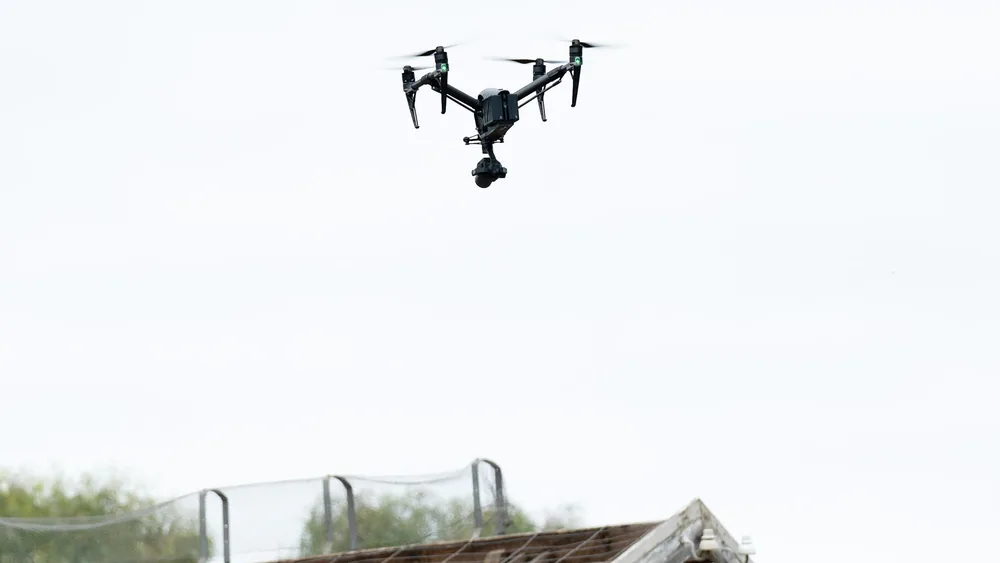
| Drone survey | Aerial photos and thermal images | Very large or hard-to-reach roofs |
Infrared works best on a dry roof after a sunny day, scanned at night and confirmed with cores. On a 20,000 sq ft roof, a scan runs roughly $1,000 to $2,400 and can change a six-figure decision.
What a Good Inspection Report Looks Like
- Date, roof areas and inspection method
- Roof plan with each issue marked
- Photos of every finding
- Priority for each item: urgent, soon, monitor
- Repair costs or a range for each item
- Estimated remaining roof life
- Moisture scan results and core findings, if done
Who Should Inspect Your Roof?
For routine checks, an experienced commercial roofer is enough. For purchases, disputes and large claims, consider an independent credential:
- Commercial roofing contractor: routine and post-storm inspections, repair pricing
- Registered Roof Consultant (RRC, IIBEC): independent assessments, specifications and disputes
- Haag Certified Inspector (HCI): storm damage assessment, often used in insurance claims
- Infrared thermographer: certified operator for moisture surveys
Whoever you hire, ask for sample reports, insurance certificates and proof they walk the roof rather than inspect from a ladder.
Warning Signs to Watch for Between Inspections
- Ceiling stains or drips after rain
- Loose or bent edge metal and coping
- Water standing more than 48 hours after rain
- Blisters, splits or wrinkles visible from a roof hatch
- Debris piled near drains or rooftop units
- Higher cooling bills or damp-smelling top floors
- Interior wall or parapet stains, which can signal a wider envelope problem
If you see any of these, schedule an inspection before the next storm rather than waiting for the next scheduled visit.
Buying a Building? What the Roof Report Must Answer
- What roof system is it, how many layers are there, and when was it installed?
- Is any insulation wet, and how much of the roof?
- Is there a manufacturer warranty, and can it be transferred?
- What needs repair now, and what will it cost?
- How many years of life are left, and what will replacement cost?
- Are drains, edges and flashings in code-compliant condition?
- Is there evidence of past hail or storm damage that wasn’t repaired?
Use the answers in price negotiations, or ask the seller to complete repairs before closing.

How Much a Commercial Roof Inspection Costs
| Inspection | Typical cost |
|---|---|
| Basic visual inspection | about $500 |
| Infrared moisture scan | $0.05 – $0.12 / sq ft (e.g., $1,000 – $2,400 on 20,000 sq ft) |
| Infrared inspection (flat-rate quotes) | $1,500+ |
| Inspection within a maintenance agreement | Often included |
ThePricer, commercial roof inspection cost (May 2026).
FAQs | Commercial Roof Inspections
Can a drone inspection replace a roof walk?
Not fully. Drones are great for photos and thermal images of large roofs, but seams, flashings and soft spots still need hands-on checks and, where needed, core samples.
Will a roof inspection lower my insurance premium?
Not directly in most cases, but documented inspections and maintenance help prove a roof’s condition when you file a claim, and some insurers ask for roof reports at renewal on older roofs.
Is a free roof inspection really free?
From a reputable contractor, yes: you get an assessment and report with no obligation. Moisture scans on large roofs and detailed pre-purchase reports may be priced separately, so ask what’s included.
How long does a commercial roof inspection take?
A visual inspection of a typical commercial roof takes one to a few hours. Infrared scans are done at night and core sampling adds time, so a full moisture survey can take longer.
What fails a commercial roof inspection?
Common findings include open seams, wet insulation, ponding past 48 hours, failed flashings, rusted or backed-out fasteners on metal roofs, and blistering or cracking. On a pre-purchase inspection, a roof near the end of its life is also a red flag.
Can my insurance company inspect my roof?
Yes. Insurers inspect roofs for underwriting, at renewal and during claims. Their inspection serves the insurer, so it’s wise to have your own documented inspection too.
Book Your Free Roof Assessment
We’ll inspect every area on the checklist, photograph what we find and give you a written, prioritized report, with no obligation.
- Free roof inspection across San Antonio, including Westover Hills, roof inspections in Alamo Ranch and Leon Valley
- Moisture scans available for larger roofs and purchases
Book your free roof inspection in San Antonio or see commercial roof maintenance programs.
Start the conversation
Questions get answered by the roofers who wrote the article, not a chatbot.