


In this article 17 sections
- What Does Hail Damage Look Like on a Flat Roof?
- What Size Hail Damages a Flat Roof?
- Hail Damage Signs on TPO and PVC
- Hail Damage Signs on EPDM
- Hail Damage on Mod-Bit, Metal and Rooftop Equipment
- How to Check for Hail Damage Safely From the Ground
- Hidden Damage | Fractured Membrane and Crushed Insulation
- Hail Damage vs Normal Wear | How Adjusters Tell
- What to Do After You Find Hail Damage
- How to Make Your Next Roof More Hail-Resistant
- FAQs | Identifying Hail Damage
- Does a roof warranty cover hail damage?
- Can hail damage show up weeks later?
- Should I get my roof inspected after every hailstorm?
- Is it possible to tell if hail damage is recent?
- Does insurance cover hail damage on a flat roof?
- Request a Post-Storm Roof Inspection
What Does Hail Damage Look Like on a Flat Roof?
Hail damage that’s missed now becomes a leak, and a harder insurance claim, later. Here’s what to look for on each roof type, from our post-storm inspections across commercial roofing in San Antonio. For safety, leave the actual roof walk to a professional.

What Size Hail Damages a Flat Roof?
Hail around 1.75 inches (golf-ball size) and larger is where damage to commercial membranes becomes likely, but older or thinner roofs can be damaged by smaller hail. FM Approvals groups hail into three classes:
| FM hail class | Hail size | Typical risk to a flat roof |
|---|---|---|
| Moderate (MH) | Under 1.75 in | Bruising; damage mainly on old, brittle or thin membranes |
| Severe (SH) | 1.75 – 2 in | Fractures and punctures likely on many roofs, crushed insulation |
| Very severe (VSH) | 2 in and larger | Damage likely unless the roof is VSH-rated |
Hail classes: FM Approvals via GAF.
Three things change the threshold for your roof:
- Age: TPO and PVC get stiffer with UV exposure, so a 10-year-old membrane cracks more easily than a new one.
- Thickness: 60 and 80 mil membranes absorb impact better than 45 mil.
- What’s underneath: a high-density cover board protects far better than membrane laid directly over soft polyiso.
Hail Damage Signs on TPO and PVC
- Punctures or splits in the membrane, often round or crescent-shaped
- Star-shaped or radial cracks around an impact point
- Bruising or soft spots where the membrane feels spongy underfoot, a sign of crushed insulation
- Fractured seams at impact points along welds
- Surface fractures on older, more brittle membranes
Hail Damage Signs on EPDM
- Rubber flexes on impact, so surface marks may be faint
- Punctures or tears, especially where EPDM sits over hard edges or fasteners
- Crushed insulation under impact points
- Damaged seam tape and flashing at impact points
Hail Damage on Mod-Bit, Metal and Rooftop Equipment
| Surface | Signs of hail |
|---|---|
| Modified bitumen / BUR | Granule loss in round spots, fractured mat, exposed asphalt, displaced gravel |
| Metal panels | Dents; scratches exposing bare metal; loosened or deformed seams in severe hail |
| Soft metals (vents, flashing, gutters, HVAC fins) | Round dents that show hail size and direction |
| Skylights | Cracked or shattered domes and panels |
| Spray foam | Pocks or punctures through the coating into the foam |
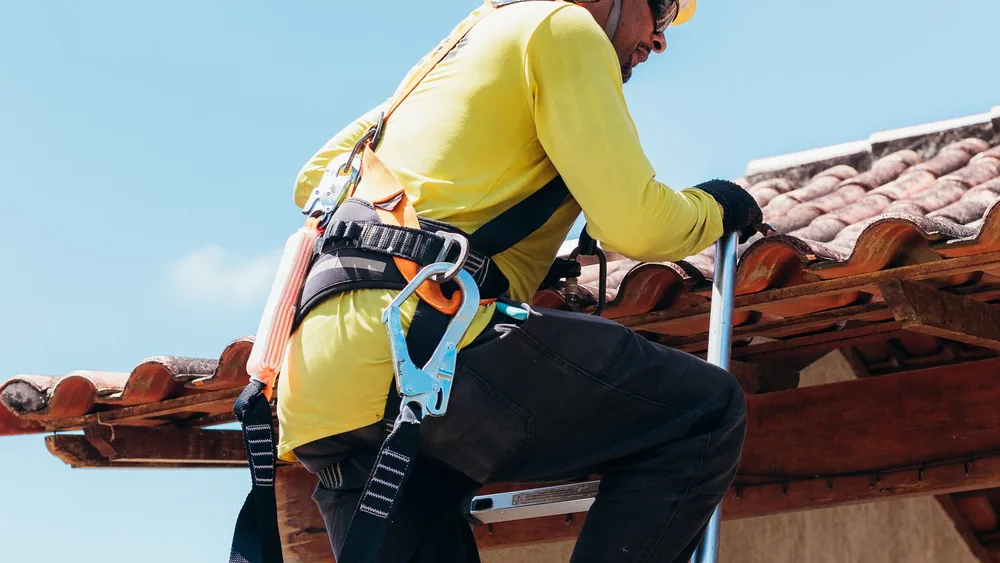
How to Check for Hail Damage Safely From the Ground
You can spot the signs that justify a professional inspection without going on the roof:
- Check soft metals: dents in gutters, downspouts, AC units, vents and car hoods show hail size and direction.
- Look at rooftop units: flattened condenser fins are a strong hail indicator.
- Check skylights and windows for cracks.
- Look inside: new ceiling stains, damp tiles or drips on the top floor.
- Photograph with something for scale (a coin or ruler) and note the storm date.

Hidden Damage | Fractured Membrane and Crushed Insulation
Hail can crush insulation and cause delamination under a membrane that still looks intact. Over time, the damaged area holds water, loses insulating value and leaks. Inspectors find it by:
- Walking test areas and feeling for soft spots
- Cutting core samples at impact points to see the cover board and insulation
- Running infrared or moisture surveys across the roof
- Using drone imaging on large roofs

Hail Damage vs Normal Wear | How Adjusters Tell
| Hail damage | Normal wear |
|---|---|
| Random pattern across the roof | Concentrated at seams, edges and traffic paths |
| Fresh, sharp-edged fractures | Weathered, dirty, rounded edges |
| Matching dents in soft metals nearby | No matching soft-metal damage |
| Ties to a documented storm date | Develops gradually over years |
That’s why dated inspection reports from before the storm, and photos taken soon after it, make such a difference to a claim.
What to Do After You Find Hail Damage
- Photograph damage from the ground and inside, and note the storm date.
- Stop any active leaks with temporary repairs and keep receipts.
- Get a professional inspection with core samples or a moisture survey.
- Review your policy’s hail deductible and any cosmetic-damage exclusion.
- Report the claim to your insurer promptly.
See storm and hail damage roof repair and TPO roofing in San Antonio.
How to Make Your Next Roof More Hail-Resistant
If you’re replacing a hail-damaged roof, ask for an FM-rated hail assembly. FM tests roof systems for moderate (MH), severe (SH) and very severe (VSH) hail, the last with 2-inch ice balls fired at about 152 to 160 ft/s.
- High-density cover board (gypsum or HD polyiso) under the membrane
- Thicker membrane: 60 or 80 mil instead of 45 mil
- VSH-rated assemblies for buildings with high-value contents
- Hail guards on HVAC condenser coils
- Impact-rated skylights or screens
VSH test method: Carlisle SynTec, FM’s VSH Testing.
FAQs | Identifying Hail Damage
Does a roof warranty cover hail damage?
Usually not. Most commercial roof warranties exclude hail unless you bought a hail endorsement for an approved system. Hail damage is normally an insurance claim.
Can hail damage show up weeks later?
Yes. Fractures and crushed insulation may not leak right away. Water slowly works in, and leaks or soft spots appear weeks or months later, which is why prompt inspection matters.
Should I get my roof inspected after every hailstorm?
After any storm with noticeable hail at your property, yes. In San Antonio, hail peaks in April and May, so a quick post-storm check in those months is worth it.
Is it possible to tell if hail damage is recent?
Often. Fresh fractures have clean, sharp edges and bright exposed material, while older damage weathers and collects dirt. Linking damage to a dated storm report strengthens the case.
Does insurance cover hail damage on a flat roof?
Most commercial property policies do, minus the wind/hail deductible. Some exclude cosmetic damage or pay actual cash value on older roofs, so check your declarations page.
Request a Post-Storm Roof Inspection
We’ll inspect the membrane, flashings and rooftop equipment, take core samples where needed, and give you a dated, photo-documented report.
- Free post-storm inspection across San Antonio, including storm damage roof repair in Alamo Ranch, Westover Hills and Leon Valley
Schedule your free roof inspection in San Antonio or see hail damage roof repair.



Start the conversation
Questions get answered by the roofers who wrote the article, not a chatbot.