

In this article 19 sections
- Why Is My Metal Roof Leaking?
- Signs Your Metal Roof Needs Repair
- Leaking Fasteners and Failed Washers
- Seam, Lap and Flashing Leaks
- How to Find the Leak on a Metal Roof
- Why Is My Metal Roof Dripping When It’s Not Raining?
- Rust and Corrosion Repairs
- Why Metal Roof Repairs Fail
- Repair, Restore or Replace?
- Spot Repair vs Full Restoration Coating
- Preventing Leaks | Metal Roof Maintenance Schedule
- FAQs | Metal Roof Leaks
- How often should metal roof screws be replaced?
- Can a rusted metal roof be saved?
- Does coating stop metal roof leaks at screws?
- Why does my metal roof leak only in wind-driven rain?
- What is oil canning, and does it cause leaks?
- What sealant is best for a leaky metal roof?
- Get a Metal Roof Repair Quote
Why Is My Metal Roof Leaking?
The good news is that most metal roof leaks are fixable without replacing the roof. Here’s how we diagnose and repair them on warehouses and metal buildings across commercial roofing in San Antonio.
Signs Your Metal Roof Needs Repair
Look for these before the next big rain. Most can be seen from a roof hatch or the ground with binoculars:
- Water stains under panel laps, skylights or along the eave inside the building
- Loose or backed-out screws, often in rows along purlin lines
- Rust streaks below screws, laps and cut edges
- Separated seams or sealant squeezing out of laps
- Wavy panels (oil canning) or panels bending between supports
- Cracked or yellowed skylight panels
- Dried-out sealant around pipes, vents and curbs
Leaking Fasteners and Failed Washers
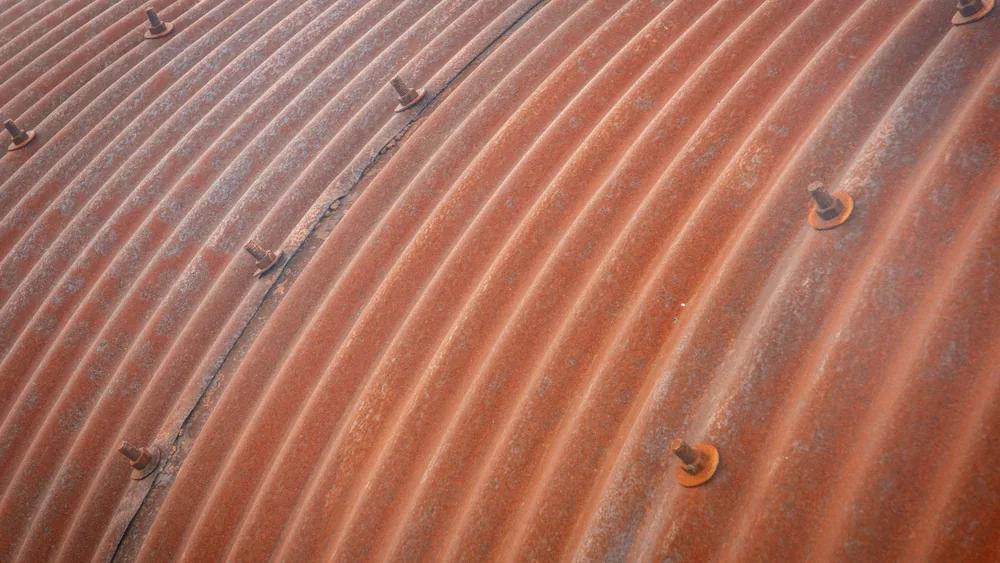
| Problem | Cause | Fix |
|---|---|---|
| Overdriven screw | Crushed washer bulges and lets water in | Replace with correctly seated fastener |
| Underdriven or angled screw | Washer never sealed | Replace and seat properly |
| Backed-out screw | Thermal movement loosens it over time | Replace with a larger-diameter screw |
| Rusted screw | Wrong coating or dissimilar metals | Replace with compatible, corrosion-resistant fastener |
| Aged washer | Rubber dries and cracks with age and UV | Replace fastener and washer |
Replacement screws should be one size larger in diameter than the original so they cut fresh threads in the existing hole, for example moving from a #14 to a #17 screw. Reusing the same size can leave a loose connection.
Fastener guidance: SFS, How to Replace Metal Roof Screws.
Seam, Lap and Flashing Leaks
- Side and end laps where panels overlap lose their sealant tape over time and let wind-driven rain in.
- Ridge caps, trims and transitions pull loose with movement.
- Penetrations such as exhaust fans, skylights and pipe flashings crack or separate.
- Gutters and valleys clog and back water up under panels.
These are repaired by re-sealing laps with compatible sealant and, often, a reinforcing fabric and coating, plus replacing failed trim and penetration flashings.
How to Find the Leak on a Metal Roof
Water travels along panel ribs and purlins before it drips, so the leak is often uphill of the stain. Roofers trace it by:
- Marking the drip location inside and measuring to a fixed point (wall or column)
- Checking every fastener, lap and penetration upslope of that point
- Looking for daylight from inside on a sunny day
- Water-testing small sections, starting low and working up, so only one area is wet at a time
Why Is My Metal Roof Dripping When It’s Not Raining?
That’s usually condensation, not a leak. Warm, humid indoor air hits the cold underside of the panels, often on cool mornings, and drips like a leak. It’s common in metal buildings with little or no insulation.
- Signs it’s condensation: drips on clear days, droplets across large areas, worse on cool mornings
- Fixes: insulation with a sealed vapor retarder on the warm side, better ventilation, controlling indoor moisture sources, or an anti-condensation coating on the underside
- Long-term fix: a retrofit roof with continuous insulation between the old and new panels
Rust and Corrosion Repairs
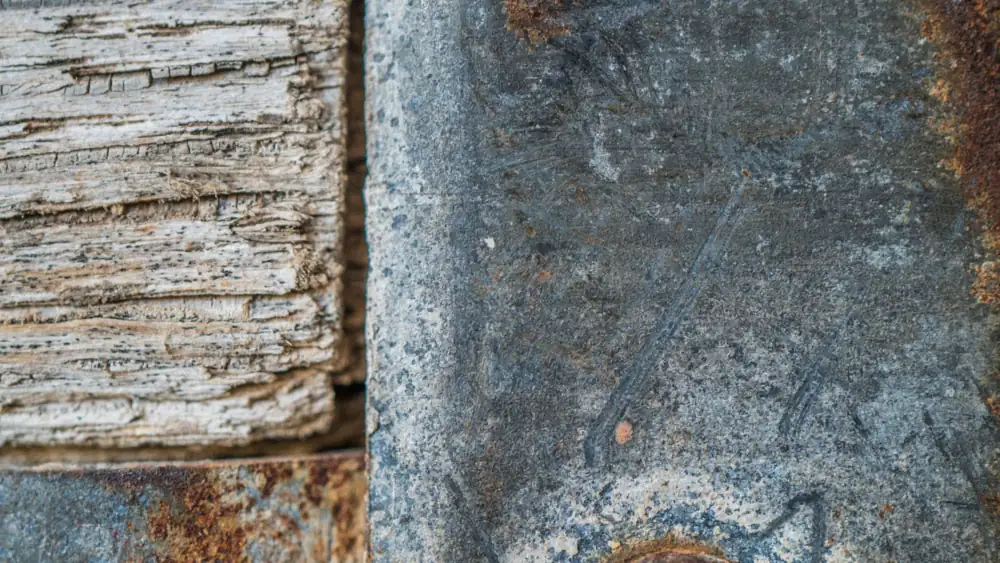
- Remove loose rust by wire brushing or grinding.
- Treat remaining rust with a rust-inhibitive primer.
- Seal or patch thinned areas; replace panels that are rusted through.
- Coat the area or the whole roof to stop further corrosion.
Why Metal Roof Repairs Fail
Most repeat leaks come from repairs that didn’t account for how metal moves. Avoid these common mistakes:
| Mistake | Why it fails | Better approach |
|---|---|---|
| Caulk smeared over a leaking screw | Seals for a season, then cracks with movement | Replace the screw with an oversized fastener |
| Rigid patches on laps | Metal expands and contracts daily | Flexible sealant plus reinforcing fabric and coating |
| Sealant over dirt or rust | Doesn’t bond | Clean, wire-brush and prime first |
| Wrong metal or fastener | Galvanic corrosion | Use compatible, coated fasteners and metals |
| Patching only the visible spot | Water entered elsewhere | Trace the full water path |
Repair, Restore or Replace?
| Choose | When |
|---|---|
| Repair | Roof under about 15 – 20 years old, a few isolated leaks |
| Restore (coating system) | Many fastener and lap leaks, surface rust, panels still solid |
| Replace or retrofit | Panels rusted through, structural damage, or you need new insulation |
Spot Repair vs Full Restoration Coating
| Spot repair | Full restoration coating | |
|---|---|---|
| Scope | Specific leaks, fasteners and laps | Whole roof: all fasteners addressed, laps sealed, rust treated, coating applied |
| Cost | Per item | About $1.50 – $4.50 / sq ft for silicone; acrylic $0.50 – $2.00 |
| Best when | Roof is young and leaks are isolated | Roof is aging with many fastener and lap issues |
| Result | Stops current leaks | Adds 10 – 20 years and a new warranty |
Coating cost: Roofr (2026).
See metal roof repair and restoration and commercial metal roofing in San Antonio.
Preventing Leaks | Metal Roof Maintenance Schedule
| When | Task |
|---|---|
| Twice a year (spring and fall) | Check fasteners, laps, trims, penetrations and gutters |
| After hail or high wind | Inspect for damaged panels, loose trim and lifted fasteners |
| Every few years | Re-seal laps and penetrations as sealant ages |
| Around 20 years for screws | Plan fastener replacement or a restoration |
FAQs | Metal Roof Leaks
How often should metal roof screws be replaced?
Plan on it around 20 years. Screws past that age are near the end of their service life, and most won’t last past 30. Inspect them twice a year and replace any that are loose, rusted or have cracked washers.
Can a rusted metal roof be saved?
Usually, if the rust is on the surface and panels aren’t rusted through. Rust is removed, primed and the roof is coated. Panels with holes are replaced or patched first.
Does coating stop metal roof leaks at screws?
A restoration coating system seals around fasteners, but only after loose or failed screws are replaced or tightened. Coating over bad fasteners just hides the problem for a while.
Why does my metal roof leak only in wind-driven rain?
Wind pushes water sideways into laps, trims and ridge caps that stay dry in normal rain. It usually points to failed lap sealant or loose trim.
What is oil canning, and does it cause leaks?
Oil canning is visible waviness in flat areas of metal panels. It’s usually cosmetic, but if it comes with loose fasteners or panel movement, have the attachment checked.
What sealant is best for a leaky metal roof?
Use sealants rated for metal roofing, such as butyl tape at laps and polyurethane or silicone sealants at trims and penetrations, matched to any coating you’ll apply later. Avoid asphalt-based roof cement, which cracks on metal.
Get a Metal Roof Repair Quote
We’ll inspect fasteners, laps, trim and rust, then quote spot repairs and a full restoration side by side.
- Free roof assessment for metal buildings across San Antonio and the I-35 corridor, including metal roof repair in Schertz, Converse and Helotes
Book your free roof inspection in San Antonio or see metal building (PEMB) roofing.
Start the conversation
Questions get answered by the roofers who wrote the article, not a chatbot.